 100% Secure Payments
HVLS Destratification: How HVLS Fans Improve Comfort and Reduce Energy Costs


In large commercial and industrial spaces, comfort challenges often start at the ceiling. Warm air naturally rises and collects overhead, while cooler air tends to settle near the floor. This separation—known as air stratification—creates uneven temperatures, uncomfortable conditions for occupants, and unnecessary strain on HVAC systems.

HVLS (High-Volume, Low-Speed) fans are one of the most effective tools for solving this problem. Through a process called destratification, HVLS fans continuously mix air from ceiling to floor, helping create a more balanced, efficient indoor environment. Let’s break down how it works and why it matters.
The Problem: Stagnant Air and Temperature Imbalance
In facilities with high ceilings—such as warehouses, manufacturing plants, retail spaces, and gyms—warm air accumulates near the roof structure. This stagnant air can be a 10–15 degree difference in temperature from the ceiling to floor level.
The result?
-
HVAC systems work harder to compensate
-
Occupants experience hot and cold zones
-
Energy costs can increase with little improvement in comfort
Without air movement, conditioned air may never reach the people who need it most.
The Solution: HVLS Destratification in Action
HVLS fans are specifically designed to move massive volumes of air at low speeds. Instead of creating disruptive gusts, they generate a gentle, continuous air movement.
1. The Jet Stream Effect
As shown in the graphic, an HVLS fan creates a vertical column of air—often referred to as a jet stream—that travels downward from the fan toward the floor. When this air reaches the ground, it moves outward in all directions.
This circulation pattern pushes cooler air upward while pulling warmer air down, blending temperatures throughout the space.
2. Clockwise Rotation for Destratification
During cooler months or when the goal is temperature equalization, HVLS fans operate in a clockwise rotation. This setting gently draws warm air trapped near the ceiling downward without creating a draft.
The result is a more uniform temperature from floor to ceiling, allowing facilities to maintain comfort without increasing thermostat settings.
3. Updrafts and Continuous Mixing
As air moves outward along the floor, it naturally rises back up the walls and structure, creating consistent updrafts. This continuous loop keeps air moving, helping prevent heat from re-stratifying, and eliminates stagnant pockets.

The Benefits: Comfort, Efficiency, and Cost Savings
When air is evenly distributed, everything works better.
Reduced HVAC Usage
With temperatures balanced throughout the facility, HVAC systems cycle less frequently. That means potentially:
-
Lower energy consumption
-
Less wear and tear on equipment
-
Reduced maintenance costs
Cohesive Indoor Temperatures
Employees, customers, and visitors experience fewer hot and cold spots, improving comfort and productivity across the space.
Improved Air Quality
Continuous air movement helps prevent stale air buildup and supports better indoor air circulation, especially in large-volume environments.
Decreased Energy Consumption
By reducing temperature stratification, HVLS fans allow facilities to maintain comfort at more efficient thermostat setpoints—generating energy savings over time.

One Fan, A Smarter Environment
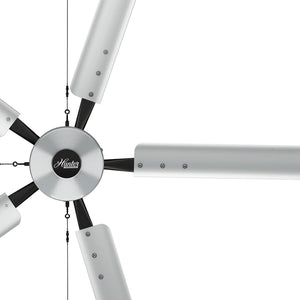
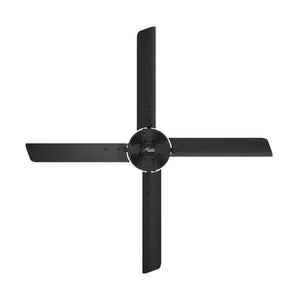
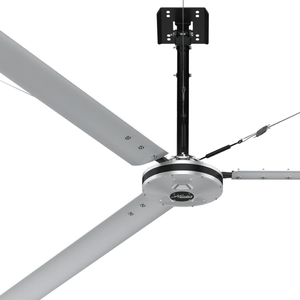
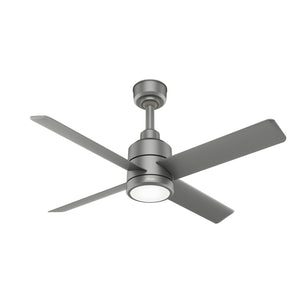
Hunter Industrial HVLS fans are engineered to deliver reliable destratification in demanding environments. With precise control options and efficient Direct Drive Motors, they help eliminate stagnant air and balance temperatures from ceiling to floor.
The result is more consistent comfort, smarter energy use, and reduced operating costs. For facilities facing uneven temperatures or rising energy demands, Hunter Industrial HVLS fans offer a simple solution with lasting impact.